
 Wondering how to add value to your home?
Keeping up with regular home maintenance maintains your home’s value. If you’re interested in increasing the value of your home, we’ve compiled several improvement ideas throughout this chapter.
If you’re planning a remodel to increase your home’s functionality for your own enjoyment, that’s something to consider during your decision-making process. If, however, you’re interested in finding the best way to increase your home’s value, the following information may be useful.
How to Increase Your Home’s Value Without Breaking the Bank
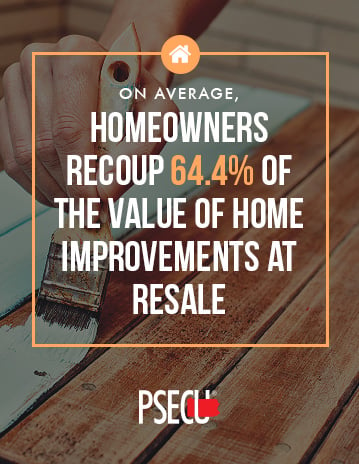
On average, homeowners recoup 64.4% of the value of home improvements at resale, when the home is sold within a year of the project’s completion. This is based on 27 projects evaluated during a 2016 cost vs. value study.
This means most projects don’t increase the value of the home beyond the actual cost of the renovation, but they can add value with limits.
If ROI is your top priority, before beginning a renovation, it’s important to understand the concept of “pricing out” of a neighborhood. External factors not related to the price of your home may limit its ability to increase in value.
Nearby school districts, the condition of surrounding homes, the stability of the housing market and other factors all have an impact on your home’s value. Because of this, in some cases, a renovation or remodel may be beneficial for you personally, but will not add value to your home. If you have questions about the value of your home related to the area in which you live, speaking with a real estate agent may be in your best interest.
If you decide you’d like to improve your home with a project that could add value without spending a large amount of money, the following options may be worth considering:
- Attic insulation: Installing new insulation in a 30×35 foot attic will cost around $1,200, but it will add approximately $116 for each $100 you spend, for a total added value of around 116%.
- Paint: Paint materials run around $100 if you DIY. By incorporating new, neutral paint color, the home could see its value increase by 1-2%.
- Simple landscaping improvements for curb appeal: Trimming shrubs, painting the front door, replacing worn siding and swapping out turf-grass for native ground covers or pea gravel can work together to increase the value of a home by 3-5%.
What Upgrades Add Value to Your Home?
While small projects can go a long way, you can also consider larger projects to add more value. These include:
- Adding stone veneer: average return of 92.9%
- Installing new garage doors: average return of 91.5%
- Adding steel entry doors: average return of 91.1%
- Replacing siding: average return of 83%
Remember that as a homeowner, building equity in your home is important. Adding actual living space to your home could allow you to refinance or reappraise your home for a lower interest rate or remove private mortgage insurance, since many of these figures come from the price per square foot.
The following examples illustrate the difference between adding living space and performing a cosmetic upgrade or repair. Building an addition or a space such as a sunroom would help increase your home’s square footage, which could increase your equity. Finishing the basement may add desirability to the home, but may not improve the equity. Increasing the number of bedrooms in your home by building an addition may be more valuable than remolding your cabinets or upgrading your kitchen appliances.
Home Improvement Ideas that May Not be Worth the Cost
It’s important to remember that it’s okay to undertake a home improvement to increase the functionality of your home. However, as we’ve mentioned before, it’s also good to understand that not all improvements add as much value at resale, even if they add a level of personal value for you.
Home improvements that are known to add less value include:
- Adding a bathroom: average return of 56.2%
- Adding to the size of a master bedroom: average return of 57.2%
- Adding a deck: average return of 57.7%
While these improvements do usually recoup some of the investment required to complete them, they do not add as much value at resale.
Improvements That Save You Money
 Some home improvements can actually save you money.
One of these improvements is solar panels. With an overall out-of-pocket cost of around $24,500 to $42,4311, the payback period, or how long it takes to recoup the price, is 9.3-10.7 years. If you plan on staying in your home for the long term, this may be a worthwhile investment, as it can offset future electricity costs by 92-100%.
Another option for investing upfront to save money in the future includes installing energy efficient Energy Star® windows, which can reduce energy bills by 7-15% while increasing the home’s retail value by 1-3%.
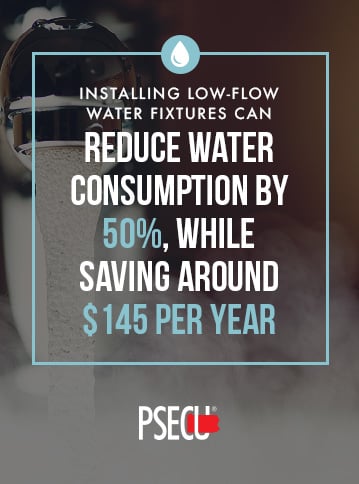
Installing low-flow water fixtures that reduce the amount of water used when using sources such as the shower or sink can reduce water consumption by 50% while saving around $145 per year. This is another upgrade that may be worth considering if you plan on staying in your home for the foreseeable future.
After completing any home improvement project, make sure you keep your receipts and record how much you spent on the improvement, as the information may come in handy for tax purposes when you sell the home.
Deciding to upgrade your home is a personal decision with many considerations. If you decide to proceed with an upgrade listed above or another home improvement project, consider learning more about equity loans offered by PSECU. We can provide you with the information you need to move forward.
Home Maintenance Doesn’t Have to Be Overwhelming
Owning a home is a privilege and should be exciting. It’s likely the largest purchase you’ll make in your lifetime. It’s where your family will make memories and where you’ll experience life. That means taking care of your home should be one of your top priorities.
It can be easy to feel overwhelmed with the prospect of keeping up with the maintenance required to keep your home and the systems inside it running smoothly. However, by performing regular preventative maintenance, you can avoid unexpected costs that could otherwise occur.
Much of this maintenance can be performed on your own, with a few inexpensive tools and knowledge. Keep this guide for future reference and pay attention to how your home works, so you’ll know if something is amiss. Also, create a maintenance calendar based on the information we’ve reviewed.
Remember, if you have questions, or you’re concerned about tackling certain projects on your own, it never hurts to call a professional.
Are You Budgeting for the Future of Your Home?
While preventative maintenance is important, it’s not without cost. Additionally, sometimes the unexpected will happen. The systems inside your home will only last for a certain amount of time. Start preparing today by setting up an emergency savings account using our Savings Shares to help you save for when you need to replace a home appliance or need a professional’s service.
Remember, understanding how your home works and performing basic routine maintenance and repairs could save money and reduce housing-related stress.
When it comes to seeking financing to purchase or maintain your home, we’re here for you. For questions or to join PSECU, contact us.
Read our other chapters
Chapter 1
Why Maintenance Matters and How to Budget for It
Chapter 2
Plumbing Maintenance — From Snaking a Main Drain to Dealing with Hard Water Clogs
Chapter 3
Well Maintenance — Water Well Maintenance Starts With Understanding Groundwater Basics
Chapter 4
Septic Tank Maintenance — Preventative Care for Your Tank and Spotting Warning Signs
Chapter 5
Sewer Line Maintenance — From Understanding How Systems Work to Spotting Clogs
Chapter 6
HVAC System Maintenance — Keeping Your Home Comfortable Throughout the Year
Chapter 7
Insulation — Better Insulating Your Home and Preventing and Addressing Drafts
Chapter 8
Home Exterior Maintenance — Saving Costs by Identifying Seasonal Tasks
Chapter 9
Home Improvement Ideas — Adding Value to Your Home and Getting a Return on Your Investment
Download all chapters as a PDF.